
As roommates are getting older - with spiraling living costs pushing home ownership and renting solo further out of reach - research by SpareRoom reveals it's not uncommon to find couples and children living in shared rentals today.
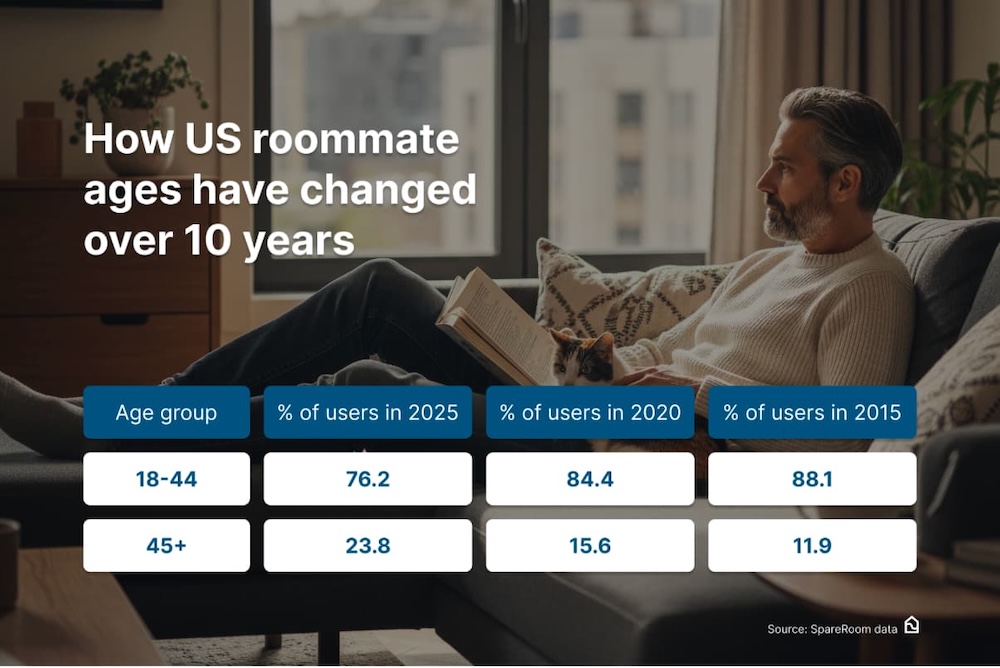
Affordability pressures and sky-high rents mean US renters are living with roommates for longer. A breakdown of SpareRoom user data by age shows that roommates aged over 45 now make up almost a quarter (24%) of the market, up from 12% a decade ago, while those aged under 45 are in decline, as shown in the table below.
According to a February 2026 survey of 491 US roommates by SpareRoom, 39% now live in multi-generational households, where the age difference between the oldest and youngest adult is 20 years or more. More than a quarter (27%) have (or are) roommates with a 30+ year age gap between them.
People are renting for longer largely due to rising rents and things don't appear to be easing up any time soon. In the first quarter of 2026, roommate rents hit record highs in five major US metros, according to rental index data from SpareRoom, putting even more pressure on the roommate market. Those priced out of renting solo and homeownership are adding to the already intense pressure on rooms available in more affordable shared accommodation.
Prevalence of couples and children in house shares
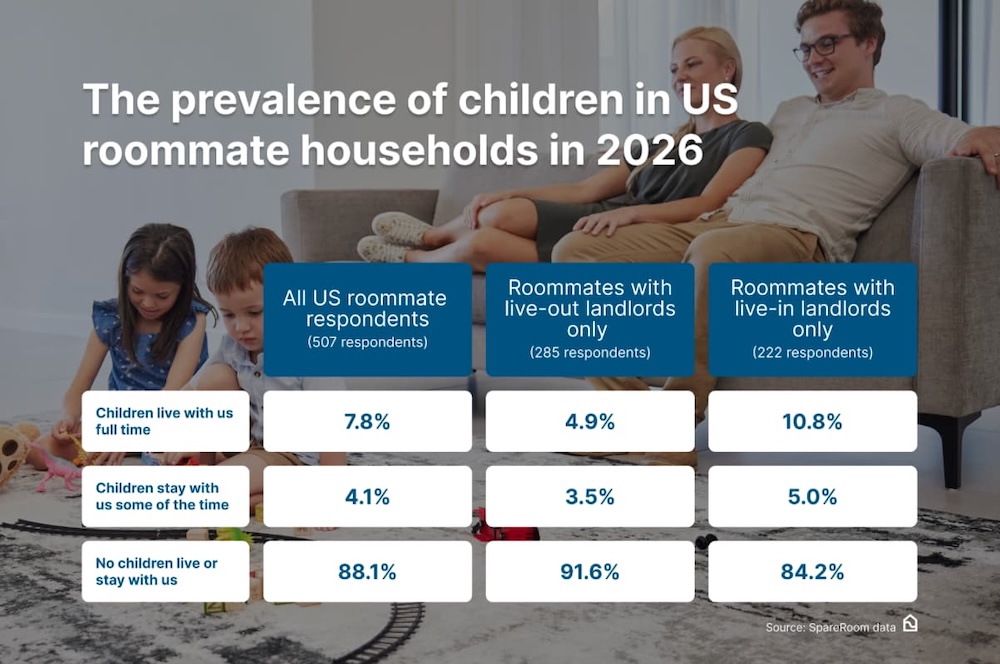
New findings reveal that today's roommate households commonly include couples and sometimes children too, signaling a major shift in how Americans are navigating housing affordability and shared living arrangements.
According to the latest data1:
- Nearly one in five (18%) US roommate households now include couples.
- Around one in nine (12%) roommate households now include children.
- Households where live-in landlords* are present are twice as likely to include children (16%) compared to households where the landlord does not live in the property (8%).
*Over the past five years (2025 vs 2020) the number of people in the US looking to rent out their spare rooms and become 'live-in landlords' has increased by 92% - a trend being led by over 65s.
The findings highlight how rising housing costs and changing lifestyle preferences are transforming the makeup of shared living situations across the country.
Matt Hutchinson, director of roommate site SpareRoom, comments: “As housing costs continue to rise, Americans are redefining what shared living looks like.
“Those traditional milestones - meeting a partner, moving into your own place together, buying a home, having kids - can be much harder to navigate when housing is unaffordable on an average wage. But life doesn't stop because couples can't afford to leave shared accommodation. People make the best of situations, even if that means moving forward with roommates.
“Shared households where children are present can take many different forms. There are the couples with understanding roommates who have their first baby before they're able to afford a place of their own. There are the homeowning families, often with older children, renting out their spare rooms. Some are single parents teaming up and renting a place together, helping each other out with childcare. Others are divorced or separated parents who've moved out of the family home and whose children stay for weekends only.
“It's not surprising to see more children living in owner-occupied homes than landlord-owned homes. But the issue of children living in roommate households full-time looks to be happening under the radar, as we're not seeing children being mentioned in roommate ads. This is a sign of the times and the knock-on effect of years of turbulence in the rental market.”