
- Record-high rents are changing the dynamics of shared rentals: fewer young people can afford to leave home while older renters are increasingly being priced out of owning homes or renting alone.
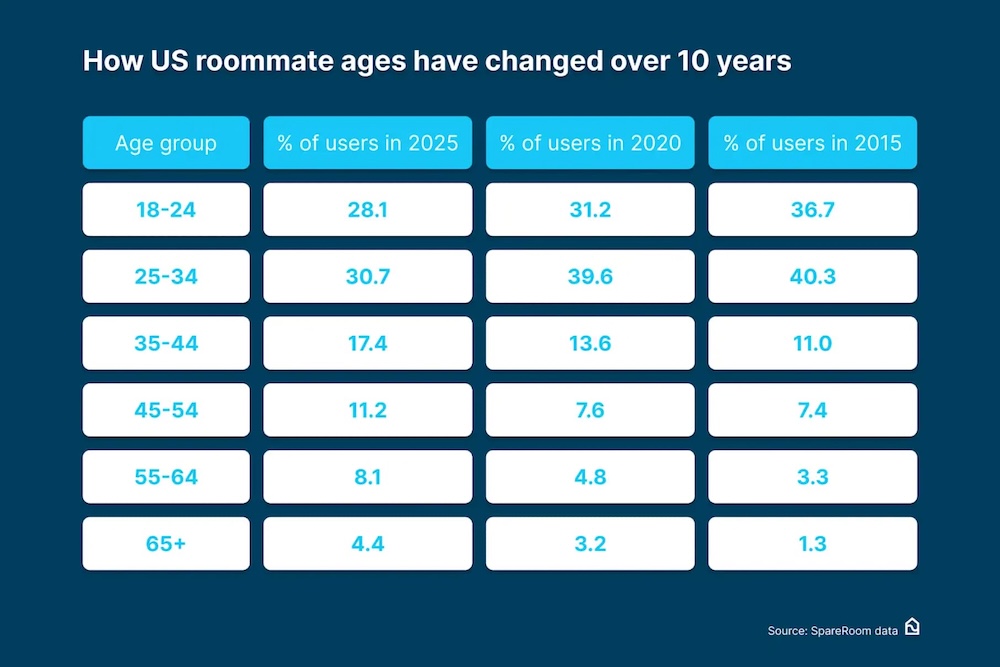
- The proportion of over 65s looking for roommates and rooms in shared rentals has more than tripled in the past decade - the biggest increase of any age group.
- Almost four in 10 roommates now live in multi-generational households, where the age difference between the oldest and youngest adult is 20 years or more.
The proportion of tenants under the age of 35 and living in shared rentals is in decline, while over 35s are rising, according to new data from roommate site SpareRoom.
Plummeting affordability in the rental market is changing the dynamics of shared households, with the fastest growing age group in the roommate market now the over 65s.
Although this age group accounts for less than 5% of all US roommates, the percentage of over 65s has more than tripled in the 10 years to 2025. The second highest increase has been seen among roommates aged 55-64.
Meanwhile, 18-24 year olds have dropped from representing 37% of the market in 2015, to just 28% in 2025. Those aged 25-34 years old - the group most typically associated with renting with roommates - has dropped from more than 40% in 2015 to less than a third in 2025, though this is still the most dominant age group.
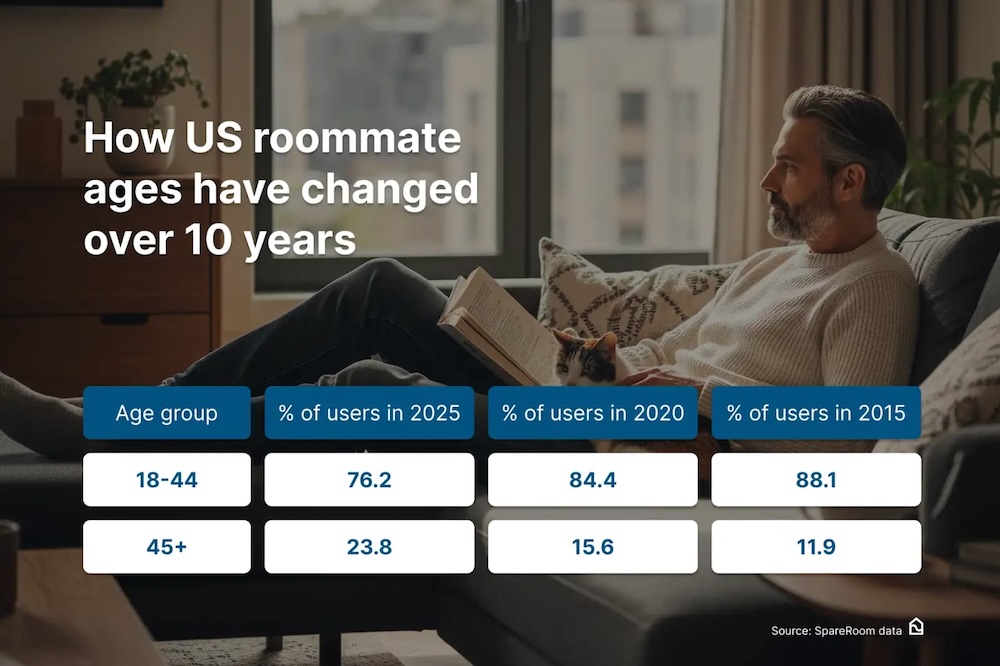
The table below shows how roommates aged over 45 represented just over a tenth of the market a decade ago, but now make up almost a quarter of it.
According to a February 2026 survey of 491 US roommates by SpareRoom, 39% now live in multi-generational households, where the age difference between the oldest and youngest adult is 20 years or more. More than a quarter (27%) have (or are) roommates with a 30+ year age gap between them.
Renter affordability in crisis
In an August 2025 survey of 1,257 US roommates, 54% said they were spending 40% or more of their take-home pay on rent. Living with roommates has always been the cheapest way to rent, and yet a sizable proportion - 42% - of survey respondents described their rent as 'unaffordable'. Over half (56%) were earning less than $50K per year.
Despite some marginal rent decreases throughout last year, room rents still hit record highs in many major metropolitan areas in 2025, and there have been no significant decreases in rents, according to SpareRoom's rental index. Those priced out of renting solo and homeownership are adding to the already intense pressure on rooms available in more affordable shared accommodation.
Matt Hutchinson, director of roommate site SpareRoom, comments: “We're inching ever further from the traditional image of the renter as a recent graduate or young professional. Today, the proportion of older Americans living as tenants in shared rentals is higher than 10 years ago, because - for some - it's simply the only way to afford housing. Renting is no longer just a stepping-stone to homeownership. For many, especially those nearing retirement without sufficient savings, it's becoming a long-term financial necessity.”