
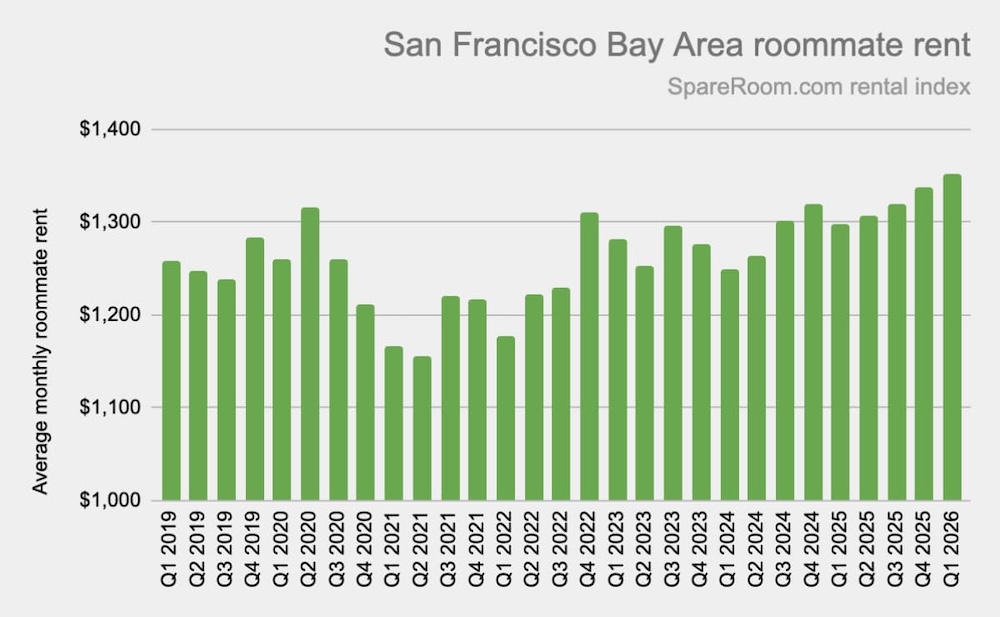
- Average monthly roommate rent in the Bay Area has risen for four consecutive quarters to hit a record high of $1,353 - up 4.4% on the previous year - as demand for the cheapest way to rent intensifies.
- The fastest growing age group in the Bay Area roommate market is now 55-64 year olds while under 35s are in decline.
Rising rent in the San Francisco Bay Area is excluding more young people from the rental market while keeping older renters in roommate situations, according to the latest rental index data from SpareRoom, which uniquely tracks roommate rents in shared households at the sharp end of America's housing affordability crisis.
Based on the latest data (Q1 2026), the average roommate rent in the Bay Area is now $1,353/month, a record high and up 4.4% on the previous year. Roommate demand is up 37% year over year.
Rent has increased for the past four consecutive quarters, as shown in the chart below. This is not the pattern being seen in other major metro areas, where roommate rent has tended to flatline or show marginal decreases in recent quarters. In New York, the average roommate rent increased slightly for the past two consecutive quarters but hit a record high back in Q2 2025.
Roommates are under no false illusions about the price of renting in the Bay Area but, at $1,312/month, the average roommate's budget is still shy of the average rent, creating an annual average shortfall of almost $500.
One effect of rising rent is that roommate households are changing. The proportion of younger people under 35 and sharing with roommates is in decline while those aged 35+ are becoming ever more present.
In fact, the fastest-growing age group in the Bay Area roommate market is 55-64 year olds, whose share increased by more than two thirds (+68%) in five years to 2025. The oldest cohort aged 65+ has also increased (+39%). Seniors on fixed retirement incomes may find their options are more limited as rent increases.
Adults aged 55 and over now represent 14.5% of the Bay Area roommate market, up from 9.3% five years ago, as shown in the table below:
| Age group | % of users in 2025 | % of users in 2020 | 5-year change |
|---|---|---|---|
| 18-24 | 28.3% | 30.2% | -6% |
| 25-34 | 30.2% | 39.5% | -24% |
| 35-44 | 16% | 13.1% | 22% |
| 45-54 | 11% | 7.9% | 40% |
| 55-64 | 8.9% | 5.3% | 68% |
| 65+ | 5.6% | 4% | 39% |
Matt Hutchinson, director of roommate site SpareRoom, comments: “For some, sharing with roommates is a choice; living with strangers who quickly become friends is a great way to navigate a new city. For others, it's a situation they find themselves in when rising living costs have taken away their freedom to choose. Either way, roommate rental supply is a critical piece in the affordable housing puzzle. But when under 35s are being priced out of roommate living and older renters are sharing for longer, you have to wonder what people will do when even renting as a roommate is no longer affordable.”
Notes to Editor
Matt Hutchinson is available for interviews. Please direct any queries to: media@spareroom.com
Data methodology: SpareRoom's quarterly rental index is based on asking rent for almost 63,000 room-offered ads placed on SpareRoom in Q1 2026 and Q1 2025. To be included, US metro areas had a minimum of 250 ads for each quarter. Those included represent the most popular metros among roommates. Age data is based on a sample of almost 17,000 San Francisco Bay Area tenants who had a room-wanted advert or listed on a room-offered advert on SpareRoom.com, live at any time in the years 2025 and 2020.
About SpareRoom
SpareRoom is the #1 roommate finder and every three minutes someone finds a roommate on SpareRoom. SpareRoom is active across the UK and US and has so far helped more than 19 million people fill or find a room. www.spareroom.com