
- Renter demand for roommate situations in metro Chicago is rising 46% year over year, according to new data from roommate site SpareRoom.
- Roommate rent is rising 5.3% year over year, the highest increase of 26 major US metro areas.
Adding a roommate may not be a new way to cope with the rising cost of living but it is an increasingly popular one: SpareRoom reports demand for roommate situations in Chicago is up 46% year over year.
In the third quarter of 2026 there were, on average, 4.9 people enquiring per room available to rent, the highest of the 26 major metro areas most popular with roommates.
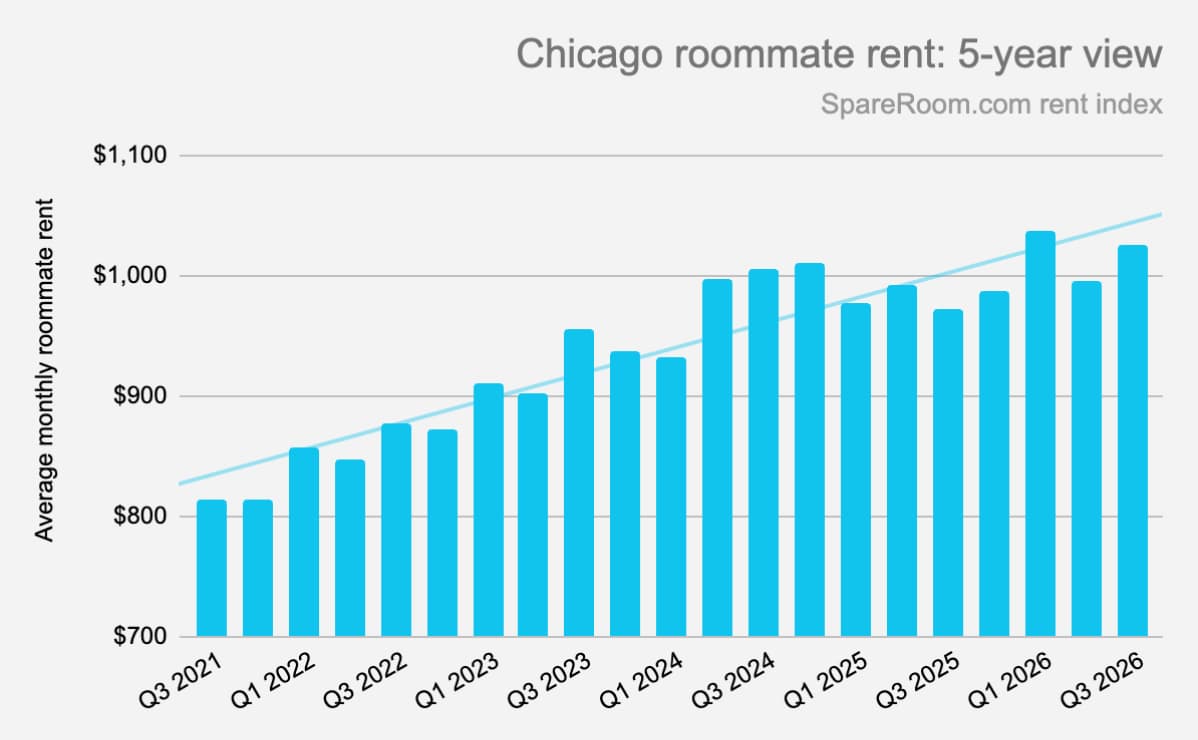
Rent is up 5.3% year over year - again the highest rise of any metro area - and it now costs on average $1,026/month, excluding bills, to share as a roommate.
SpareRoom also tracks what roommates are budgeting for rent, and this figure falls well short of the average rent, by $108/month or $1,299/year, putting renters at risk of debt.
A September 2026 survey of roommates across the US revealed one third (33%) have used a credit card and the same proportion has borrowed from friends or family to help pay rent1.
The chart below shows how rent has risen for roommates sharing apartments over the past five years:
Matt Hutchinson, director of roommate site SpareRoom, comments: “Chicago might not have the highest rent in the US, but it does have the tightest rental market. It's top for roommate demand and it's top for rent rises, but no Windy City renter struggling with the cost of living wants to see it win this particular competition.
“When renters hit their ceiling of affordability they will often look to the roommate market because splitting rent can offer massive financial savings compared to renting solo. That puts pressure on supply at this end of the rental market, pushing up prices. But when sharing rent gets too expensive, where do people go next? The only way out is to take bold steps to correct the supply-demand imbalance.”